
What the Cost to Install Pavers Actually Buys You
When homeowners in Tampa start researching pavers, the first question is almost always about price. And that makes sense. You want to know what you're getting into before committing to a project that involves tearing up your driveway or completely reworking your patio.
But here's the thing: the cost to install pavers isn't just a number. It's a breakdown of everything that goes into turning a plain outdoor surface into something functional, beautiful, and built to last. Understanding what that money actually covers helps you make a smarter decision, not just a cheaper one.
What Goes Into the Cost to Install Pavers
Before you can compare quotes or decide on a budget, it helps to understand what you're actually paying for. Paver installation isn't just dropping stones onto the ground. There's a process behind it that determines how long the finished surface holds up, especially in Florida's heat and frequent rain.
Site Preparation and Excavation
This is often the biggest labor cost, and it's also the most important step. The crew has to excavate the area to the correct depth, which typically means removing several inches of soil and existing material to create a stable base beneath the pavers.
If the ground isn't properly prepared, the pavers will shift, sink, or crack within a few years. A solid base isn't visible once the job is done, but it's what separates a surface that lasts 20 years from one that needs repairs in 5.
Base Material and Compaction
Once excavation is complete, the installer lays a crushed stone or gravel base, then compacts it in layers. This creates a foundation that drains properly and resists movement under foot traffic, vehicle weight, or the kind of heavy rain Tampa sees during hurricane season.
Skimping on base material is one of the most common ways budget contractors cut corners. The savings show up in your quote but disappear quickly once you're dealing with uneven surfaces.
The Pavers Themselves
The material you choose has a significant impact on the overall cost. Concrete pavers are generally the most affordable and still look great. Natural stone options like travertine or bluestone cost more but bring a premium aesthetic that holds up well in Florida's outdoor environment.
Brick pavers fall somewhere in between, offering a classic look with solid durability. The size, thickness, and texture of the pavers also affect pricing, so what you see at a showroom doesn't always reflect what you'll pay once it's installed across your specific square footage.
Edging, Sand Bedding, and Jointing
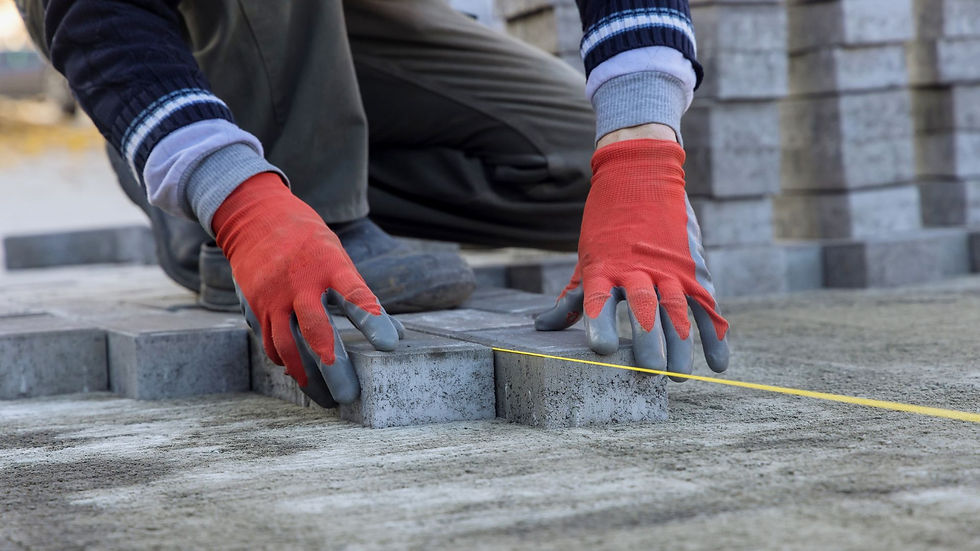
After the base is set, installers lay a layer of bedding sand before placing each paver by hand. This layer allows for minor adjustments and helps the pavers lock together. Edge restraints are then installed along the perimeter to keep everything in place over time.
Once the pavers are set, joint sand or polymeric sand is swept into the gaps. Polymeric sand is the preferred option for most Tampa homeowners because it hardens slightly and resists insects, weeds, and washout from heavy rain.
Labor and Project Complexity
Labor is a major portion of any paver installation quote. The more intricate the design, curved patterns, multiple paver sizes, or tight spaces around pools or landscaping, the more time it takes and the higher the labor cost.
Straight grid patterns on flat ground are the most affordable to install. Herringbone, fan patterns, or custom borders require more cutting and precision, which adds time and skill to the job.
What Affects the Total Cost in Tampa
Tampa's climate and soil conditions create a specific set of requirements that influence what your installation will cost.
Soil Conditions and Drainage
Florida's sandy soil can drain quickly, but it can also shift in certain areas. Depending on where your property sits, the crew may need to address drainage before laying the base. Poor drainage beneath pavers leads to erosion, sinking, and premature failure - problems no homeowner wants to deal with.
In some cases, additional gravel depth or drainage channels are needed, which add to the project cost but protect the investment over the long term.
Project Size and Scope
A small patio runs significantly less than a full driveway replacement or a multi-area outdoor living space. Most contractors price by the square foot, so the total cost scales with how large the area is.
That said, larger projects sometimes benefit from reduced per-square-foot pricing because mobilization costs are spread across a bigger job. It's worth asking your installer about this when getting quotes.
Access and Existing Surface Removal
If there's an existing concrete slab, asphalt driveway, or old patio that needs to come out first, that adds cost. Demolition and haul-away aren't always included in the base quote, so it's important to clarify this upfront before signing anything.
Tight access, a backyard with a narrow gate or a side yard, can also increase labor costs since equipment has to be smaller or materials have to be carried farther.
The Long-Term Value Behind the Price
One of the most important things to understand about paver installation is that the cost isn't just about the install day. It's about what you get for years afterward.
Durability That Holds Up in Florida's Climate
Quality pavers - properly installed with the right base - can last 25 to 50 years with minimal maintenance. That's a surface that outlasts most roofs and is far more durable than a poured concrete slab, which tends to crack under Florida's heat cycles and soil movement.
If a paver does crack or shift, you can replace individual pieces without touching the surrounding area. Concrete repair, on the other hand, almost always shows patchwork.
Curb Appeal and Property Value
A well-designed paver driveway or patio genuinely adds to a home's value. It's one of those upgrades that improves how the property looks from the street and how functional the outdoor space feels day-to-day.
In a market like Tampa, where outdoor living is practically a lifestyle, a finished patio or driveway can be a meaningful differentiator when it comes time to sell.
Low Maintenance Requirements
Once installed, pavers don't demand much. A periodic rinse, re-sanding of joints every few years, and occasional sealing (depending on the material) are typically all that's needed. There's no repainting, no sealing every year, and no dealing with large cracks the way you would with concrete.
How Paver Projects Fit Into a Larger Outdoor Design
Pavers rarely exist in isolation. Most homeowners use them as part of a broader outdoor transformation, whether that's a pool deck, a front entry, a side walkway, or an entire outdoor living area.
That's where working with a team that handles full landscape design becomes valuable. Pavers look best when they're integrated with the surrounding plantings, edging, turf, and hardscape in a way that feels cohesive rather than pieced together.
A quality landscape design plan ensures the pavers complement what's around them - not just functionally, but visually. That's the difference between a driveway that just exists and an outdoor space that actually makes an impression.
What a Fair Quote Should Include
When you receive a quote for paver installation, it should clearly break down the following:
Excavation depth and base preparation
Type and thickness of base material
Paver material, size, and color options
Edge restraint and bedding sand details
Joint sand type (standard vs. polymeric)
Labor for the specific pattern or design
Any demolition or removal costs for existing surfaces
Timeline and cleanup expectations
If a quote is significantly lower than others without a clear explanation, ask where the savings are coming from. Low bids often mean thinner bases, lower-quality pavers, or fewer steps in the process - all of which show up in problems down the road.
Questions to Ask Before Hiring a Paver Installer
Getting the right crew matters as much as choosing the right pavers. Here are a few questions worth asking before you sign a contract:
How deep will you excavate, and what base material will you use?
What type of joint sand do you use, and why?
Do you use edge restraints on all sides?
What's your process if a paver shifts or sinks after installation?
Are demolition and haul-away included in the quote?
A contractor who answers these questions clearly and confidently is one who knows their trade. Vague or dismissive answers are a reason to look elsewhere.
Frequently Asked Questions About the Cost to Install Pavers
How much does it typically cost to install pavers in Tampa?
Paver installation in Tampa generally ranges from $10 to $30 per square foot depending on materials, project complexity, and site conditions. Concrete pavers are on the lower end, while natural stone options like travertine push toward the higher end of that range.
Are pavers worth the cost compared to poured concrete?
For most Tampa homeowners, yes. Pavers are more durable, more attractive, and easier to repair than poured concrete. They also hold up better in Florida's heat and soil conditions, and they add more to property value than a basic concrete slab.
How long does paver installation take?
Most residential projects take anywhere from two days to a full week, depending on the size of the area and any prep work needed. Larger driveways or complex outdoor living spaces may take longer.
Can pavers be installed over an existing concrete slab?
In some cases, yes - but it's not always the best approach. Installing over an existing slab can limit drainage and base flexibility. Most experienced installers will evaluate the condition of the existing surface and recommend the best path forward.
What's the most durable paver material for Tampa's climate?
Travertine and concrete pavers both perform well in Florida's heat and moisture. Travertine is naturally cooler underfoot, which is a real advantage around pools. Concrete pavers are extremely durable and available in a wide range of styles that work for driveways, patios, and walkways.
Conclusion
The cost to install pavers covers a lot more than the surface you can see. It buys a properly excavated base, quality materials, skilled labor, and a finished result that can last for decades with minimal upkeep. If you're ready to take that next step with your outdoor space, explore our landscape design services to see how Coastal Outdoor approaches projects from the ground up. Getting the full picture before you hire makes all the difference.


Comments